This post is also available in:
Everything You Need to Know About Japan’s Sticky Superfood
If you’ve ever walked through a Japanese supermarket, you’ve probably noticed little packs of sticky, stringy soybeans called natto. It’s hailed as a Japanese superfood, but many Muslim travelers wonder — is it halal? Let’s dig into what makes natto so nutritious, how to enjoy it, and what you need to check before eating it.
What is Natto?
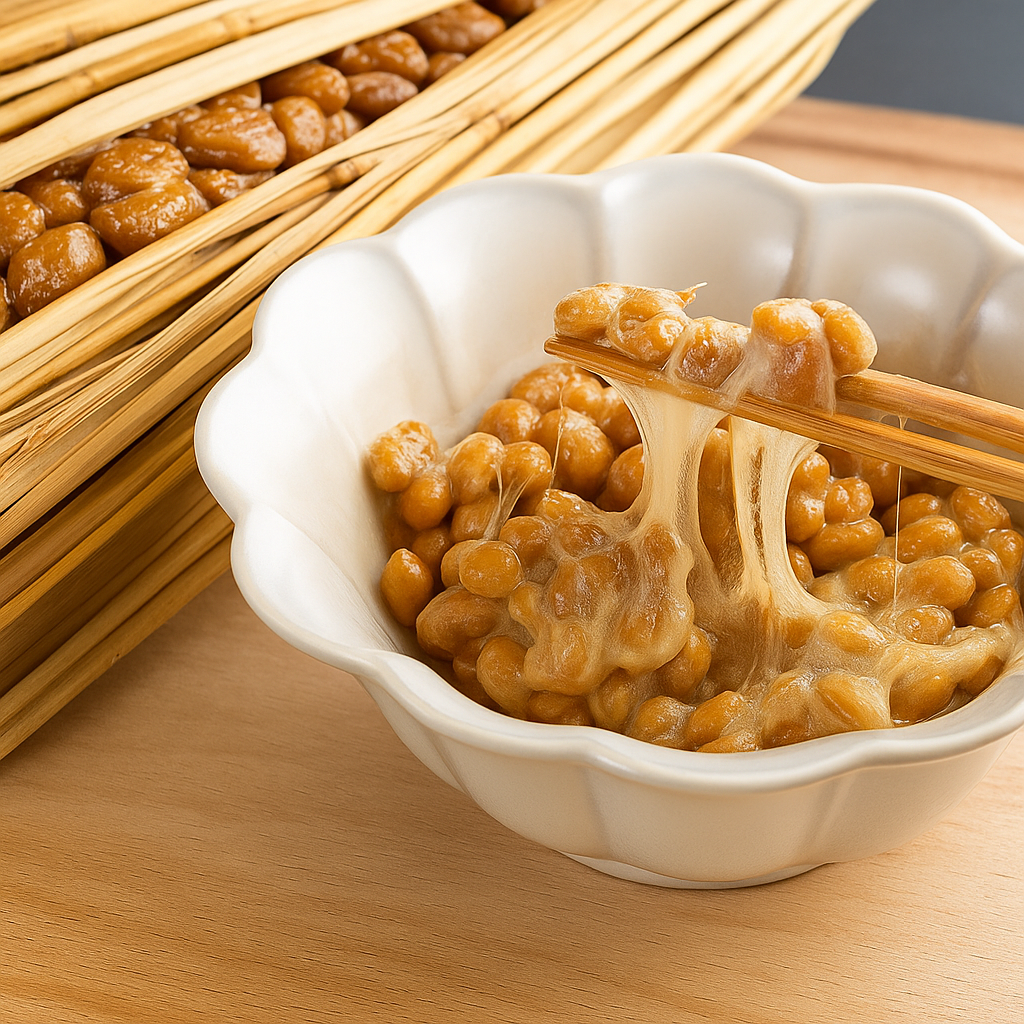
Natto is made by fermenting soybeans with Bacillus subtilis (natto-kin), giving it its signature sticky texture and strong, pungent smell. Loved (and sometimes hated) for its gooey consistency, it’s a staple breakfast food in Japan — though you’ll also see people eating it for lunch or dinner.
You’ll find natto almost everywhere in Japan: supermarkets, convenience stores, and even drugstores — usually sold in packs of 3 with a little sauce packet inside. And best of all? It’s incredibly cheap.
Why do Japanese Love Natto?
Because it’s packed with health benefits! According to Takano Foods, one of Japan’s biggest soy producers, natto is rich in:
-
Protein
-
Vitamins (B2, B6, E)
-
Minerals (magnesium, potassium, zinc)
It’s also believed to improve blood circulation and lower the risk of stroke.
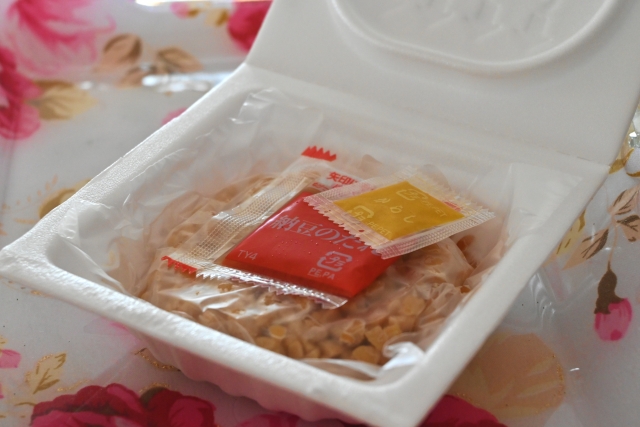
Natto comes with sauce, attached to each pack.
So… Is Natto Halal?
Here’s the good news: the soybeans and fermentation process itself are halal-friendly. Unlike some fermented foods that produce alcohol, natto bacteria break down proteins — no intoxicants involved. So, you can eat natto without worry.
But What About the Sauce?
This is where you need to be careful. Many of the sauce packets included contain a tiny amount of alcohol (often as a preservative). It won’t make you drunk, and even Japanese children and pregnant women eat it without concern. But if you want to be strict about avoiding alcohol, you can skip the sauce altogether and add your own halal-friendly soy sauce or seasoning.
💡 Tip: Always check the ingredient list on the package — it will state if alcohol is present.
For peace of mind, you can even find alcohol-free natto in some stores — or make your own simple sauce at home.
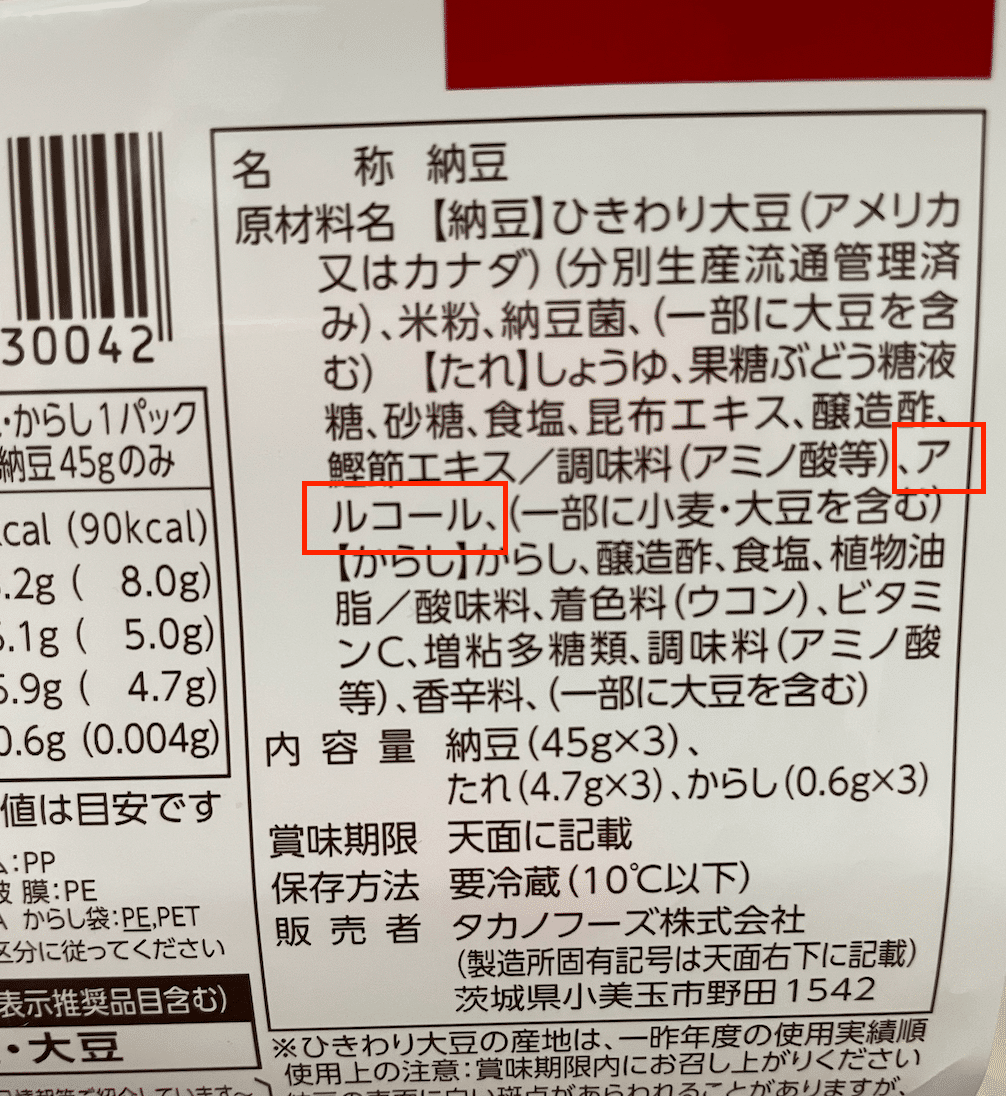
The alcohol content is written in the ingredients list
How to Enjoy Natto Like a Local
Here’s a quick guide to preparing and eating natto:
-
Open the pack, take out the sauce and the plastic film covering the beans.
-
To avoid beans sticking to the film, close the lid slightly while pulling the film out.
-
Add the sauce (or your own halal soy sauce) to the beans.
-
Stir well with chopsticks or a fork in a circular motion — it will get foamy and ready to eat!
Want to level up? Try adding a raw egg yolk and a splash of soy sauce — a classic Japanese combo. Or experiment with yakiniku sauce, spicy shoyu, or even a pinch of wasabi.
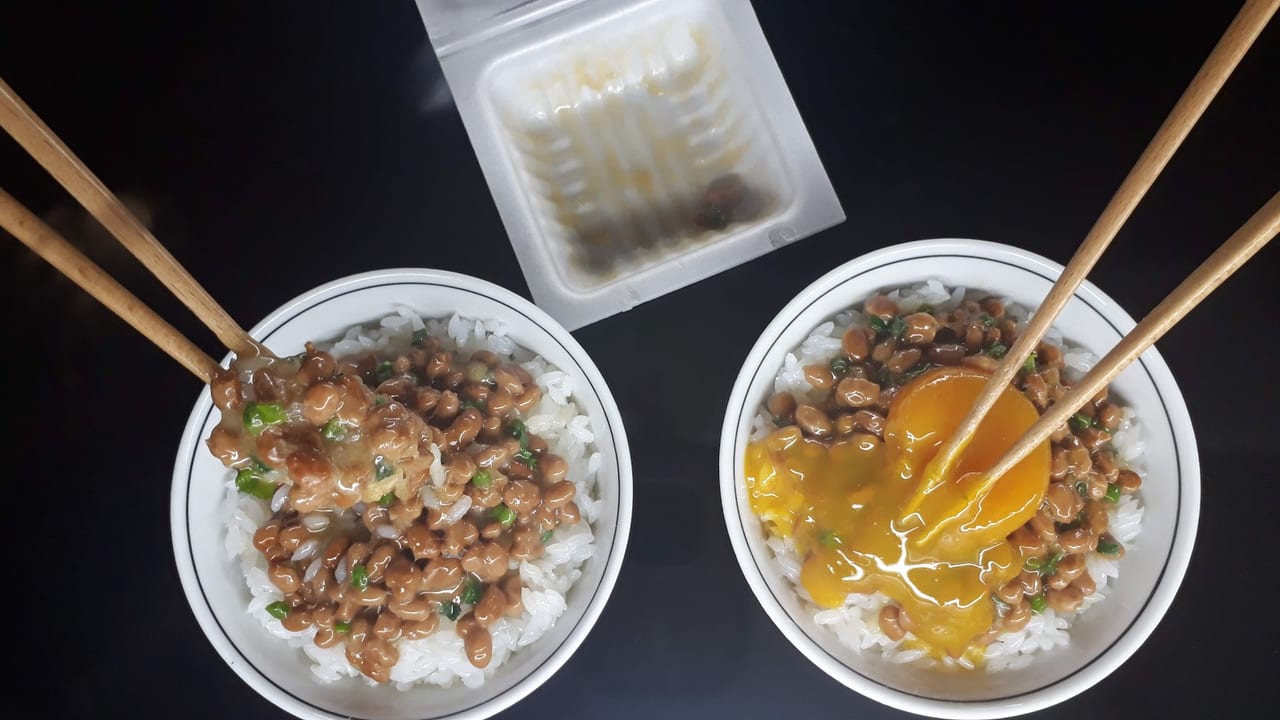
Natto may look intimidating at first, but its health benefits and unique flavor make it worth trying at least once. And now you know: as long as you skip or swap the sauce, it’s totally fine for a halal diet.
Ready to give it a go? Next time you’re in Japan, pick up a pack, follow the tips above, and enjoy this iconic superfood the way locals do.
A Brief History of Natto
The origins of natto trace back over 1,000 years (is said about during the Heian period) with stories saying it was first made accidentally when boiled soybeans were wrapped in straw and left to ferment. Straw naturally contains the Bacillus subtilis bacteria, which gives natto its signature sticky texture and unique flavor. Over time, it became a staple of Japanese breakfasts, cherished for its affordability, long shelf life, and health benefits. Even today, some traditional natto is still fermented in straw, just like in the photo above — a nod to its humble, ancient roots.