This post is also available in:
Understanding the Restaurant’s Perspective can Help Create a Smoother Dining Experience for Everyone.
Many travelers don’t realize this until they visit Japan
In many parts of the world, arriving 10 or even 15 minutes after a reservation may not cause much concern. Restaurants often expect some flexibility, and guests may simply arrive when they can.
Japan can feel different.
Reservations in Japan often play an important role in how the kitchen prepares ingredients, schedules staff, and manages seating, especially in limited space. This is particularly true for many halal-friendly restaurants, especially when it comes to smaller scale restaurants or luxury restaurants such as teppanyaki fine dining.
Understanding this difference can help both travelers and restaurants enjoy a smoother experience.
Why It Matters at Many Halal-Friendly Restaurants
Many halal-friendly restaurants in Japan prepare meals specifically for reserved guests. Some source halal-certified ingredients in limited quantities. Others begin preparing dishes before guests arrive or reserve counter seats that cannot easily be reassigned.
If a guest is significantly delayed without notice, the restaurant may not know whether to continue waiting, start preparing the meal, or release the reservation for another customer.
For restaurants making a genuine effort to welcome Muslim travelers, this uncertainty can become challenging.
A Small Message can Make a Big Difference
The good news is that most situations can be resolved with simple communication.
If you know you will arrive late because of train delays, sightseeing, or getting lost, sending a quick message or making a short phone call lets the restaurant know you are still coming. Many restaurants appreciate this more than travelers realize.
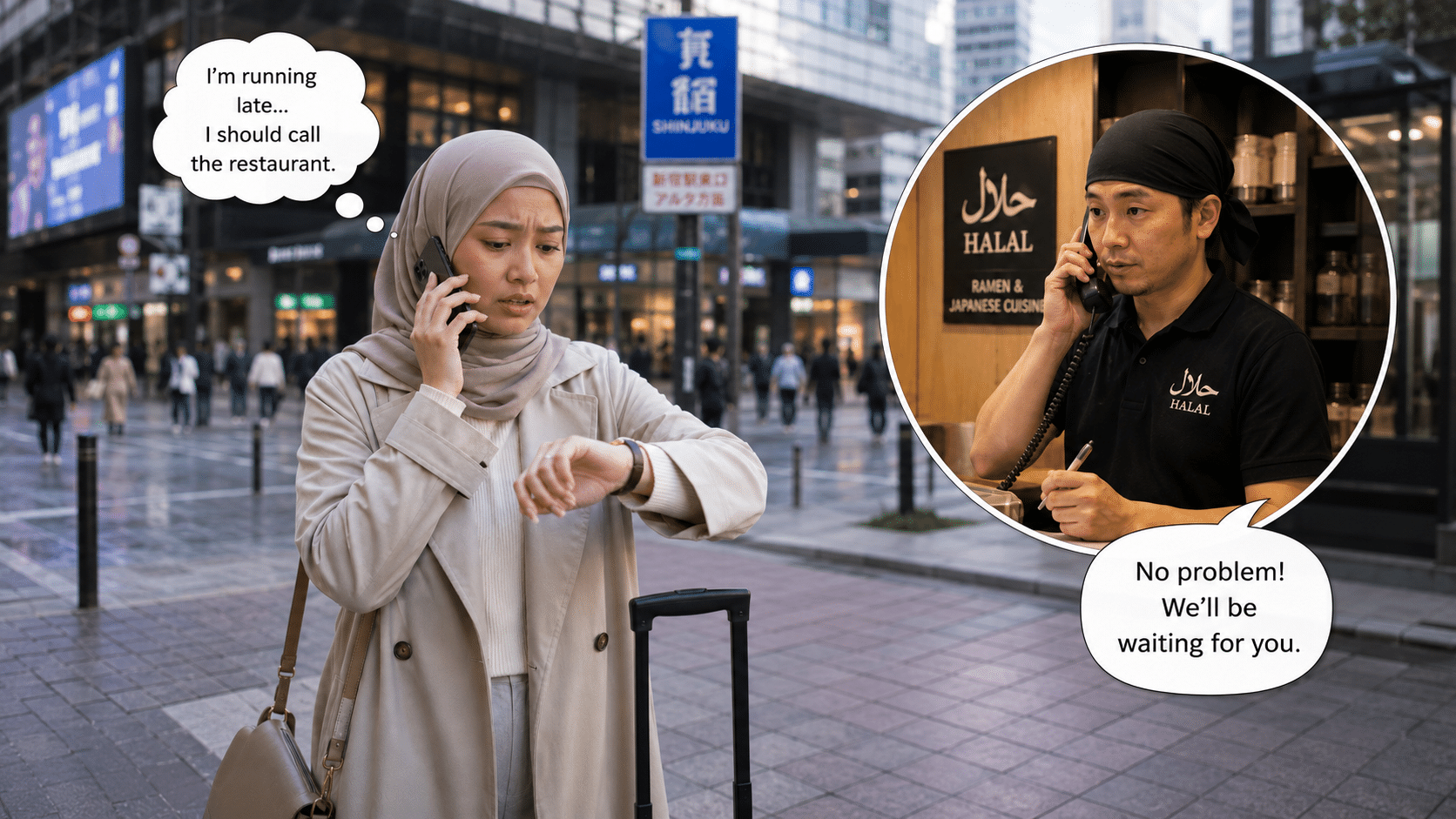
Even if the delay cannot be avoided, communication helps restaurant staff adjust their preparations and continue welcoming guests with confidence.
Food diversity is Built Through Mutual Understanding
Food diversity is not only about offering halal, vegan, or allergy-friendly meals. It is also about creating an environment where restaurants and guests understand each other’s circumstances.
Restaurants work hard to accommodate different dietary needs, while travelers can support those efforts through small acts of communication and consideration.
When both sides understand one another, dining becomes easier, more comfortable, and more enjoyable for everyone.
A Simple Habit for Your Next Trip to Japan
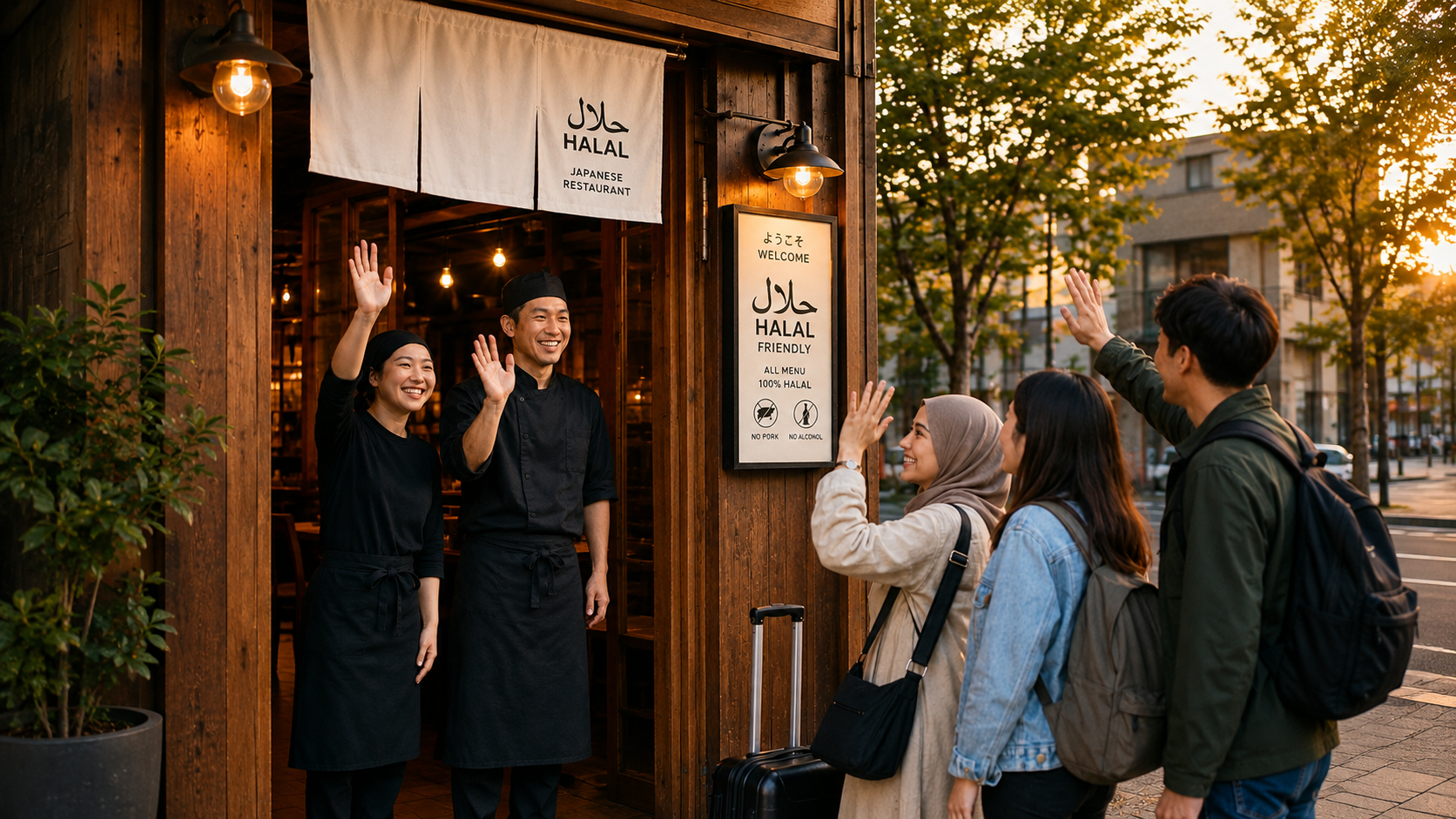
If you’re running late for a restaurant reservation in Japan, especially at a halal-friendly restaurant, consider contacting the restaurant as soon as possible.
A short phone call or even a translated message can help protect your reservation and support the restaurant’s efforts to serve you.
Sometimes, one small message is all it takes to keep your dining experience on track.
See Also
How to Properly Make and Cancel Reservations at Halal Restaurants in Japan