A Story of Friendship, Food Diversity, and Community in Hokkaido
Written by: Nareswari Putri Sulisvianthi
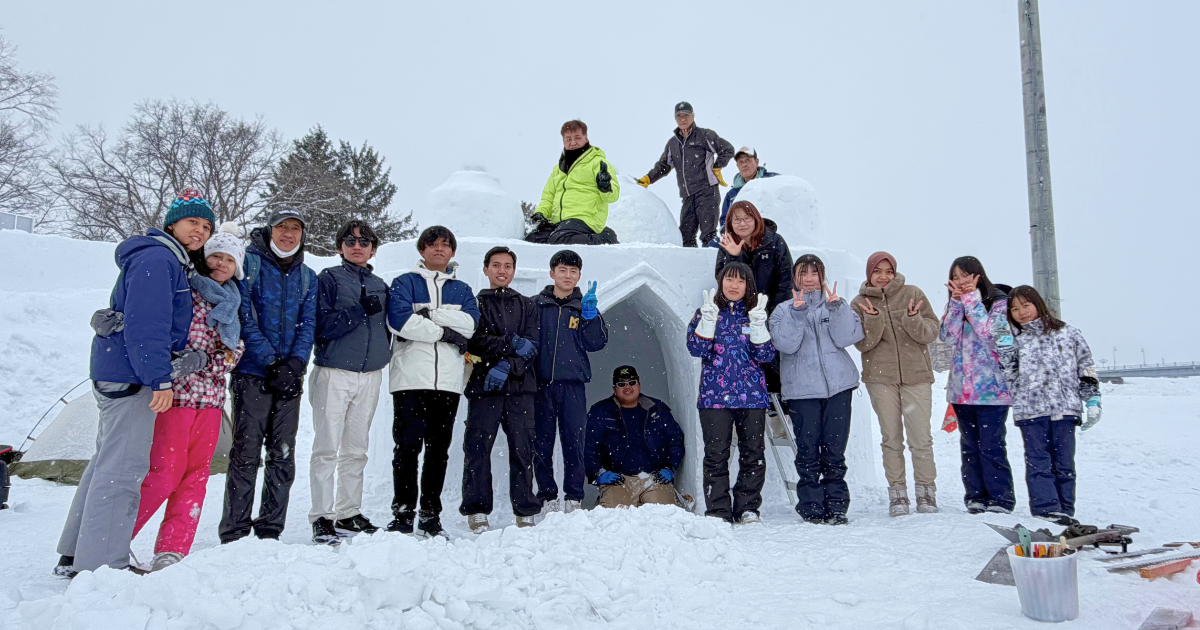
Muslims and local Japanese building a snow mosque together in Hokkaido for Asahikawa Winter Festival
If I had to choose one word to describe this picture, it would be HOPE — the quiet kind that grows slowly, like frost forming on a winter window, until one day you realize it has shaped something beautiful.
My story in Japan began long before I moved to Hokkaido.
In 2001, I was a young exchange student, wide-eyed and eager to learn. The world changed that September, and suddenly, so did the way people looked at me. Without social media, misunderstandings spread quietly, through whispers and assumptions. I spent many days explaining that my faith did not teach harm, that I was simply a student far from home.
I thought those memories had faded.
But when I moved to rural Hokkaido years later, they resurfaced — not as fear, but as a reminder of how important it is to build bridges.
The Day a Bowl of Ramen Opened a Door
Life in the countryside moves gently. People share information in small circles, and as a newcomer, and a selective introvert, I often felt like I was standing outside those circles, watching from a distance.
Then one day, a Japanese acquaintance, Sakurai san, sent me a message. She needed someone to taste-test a Muslim-friendly ramen in Asahikawa city. It was easy to get to, the timing was perfect, and, let’s be honest, there was free ramen.
So I said yes.
When we arrived, the staff proudly handed me an English menu. The effort touched me, even though the translation was a little awkward. I revised the wording on the spot, hoping it would help future Muslim visitors feel more welcome and better understand what they could enjoy.
That small act, a bowl of ramen made in halal-way, became the beginning of a friendship I didn’t know I needed.
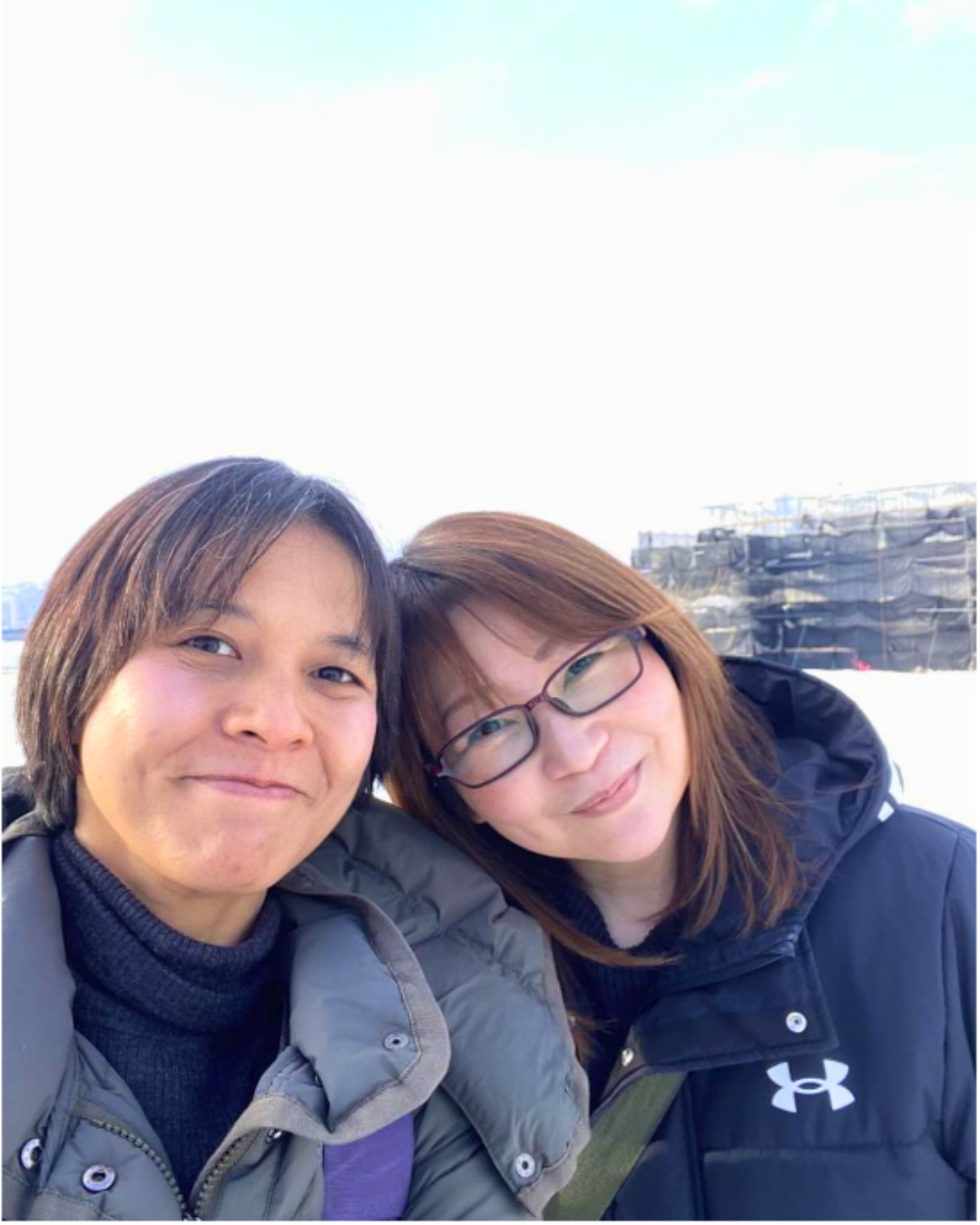
Me and Sakurai san. We became a friend.
A Mosque Carved from Snow
Months later, she contacted me again. This time, with a bigger request.
She was gathering a team for a Snow Mosque project at the Asahikawa Winter Festival, a collaboration involving local high school students, volunteers, international residents, and even skilled ice sculptors.
The goal was simple:
To welcome Muslim travelers and share a piece of Islamic culture through art.
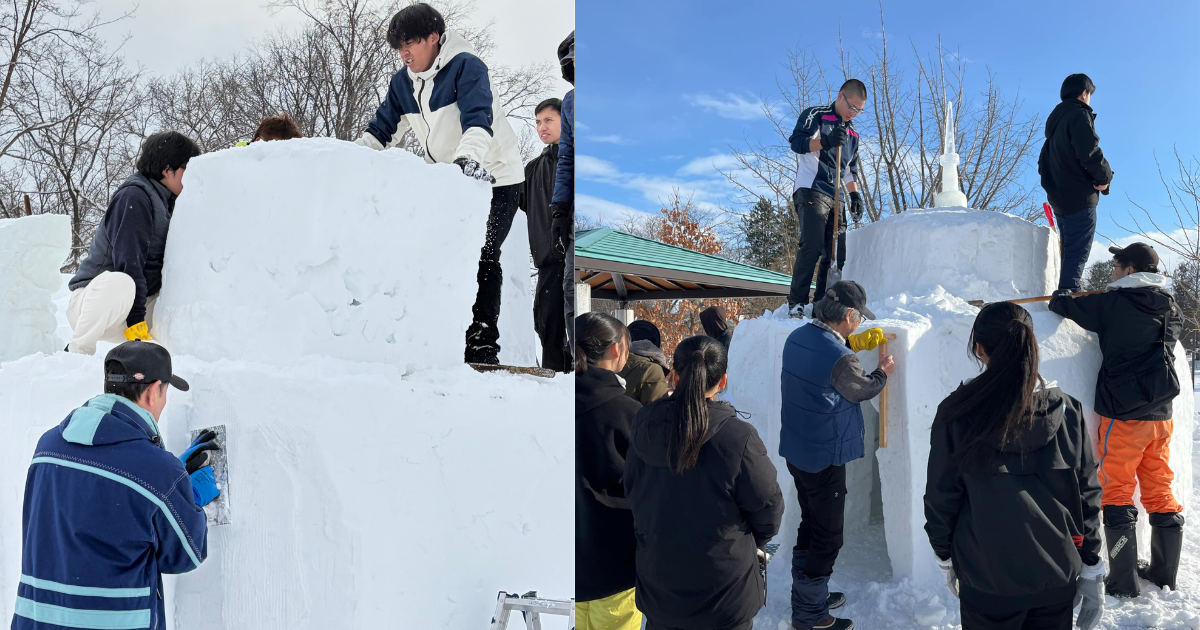
We carved the ice block into a mosque
I still remember the first day we carved the snow. The air was sharp, the kind that bites your fingertips even through gloves.
But the atmosphere was warm, laughter echoing between blocks of ice, students asking questions about Islam, volunteers sharing snacks and stories. Working together in subzero temperatures does something to people.
It melts the distance between them.
Every year, the Snow Mosque rises again, a temporary structure, but a lasting symbol of what can happen when communities choose curiosity over hesitation.
Food Diversity as a Pathway to Understanding
In Hokkaido, halal food options are still limited, particularly outside major tourist areas. But each initiative feels like a small lantern lighting the path forward:
- Restaurants experimenting with Muslim-friendly menus
- Volunteers helping with translations and ingredient checks
- Local residents learning about different dietary needs with genuine interest
Food is a powerful connector.
A bowl of ramen can become a conversation.
A shared meal can become a friendship.
A menu revision can become a bridge between cultures.
For Muslim travelers, being able to enjoy local food is more than simply finding something to eat. It can also be an opportunity to experience the culture of a destination and connect with the people who live there.
And for local communities, understanding different dietary needs can be the first step toward welcoming visitors from diverse backgrounds.
Sometimes, food diversity begins not with a grand plan, but with someone asking a simple question:
“What can we do to make you feel welcome?”
Inclusive Tourism Begins with Local Hearts
Hokkaido has always been known for its landscapes; the snowfields, the mountains, the quiet beauty. But what makes a place truly welcoming is not scenery alone.
It is people.
The Snow Mosque, the Muslim-friendly ramen, the community-led efforts, these are not grand projects funded by large institutions. They are the work of individuals who believe that hospitality should include everyone.
Inclusive tourism grows from these small seeds:
- A teacher encouraging students to volunteer
- A restaurant owner adjusting a recipe
- A neighbor asking, “What do you eat during Ramadan?”
- A community choosing to ask and learn rather than assume
These gestures accumulate, shaping a region where visitors from different cultural and religious backgrounds can feel more welcome.
And perhaps that is what makes these efforts so meaningful.
They are not simply about attracting more tourists. They are about creating opportunities for people to understand one another.
Hope Begins with Small Acts of Kindness
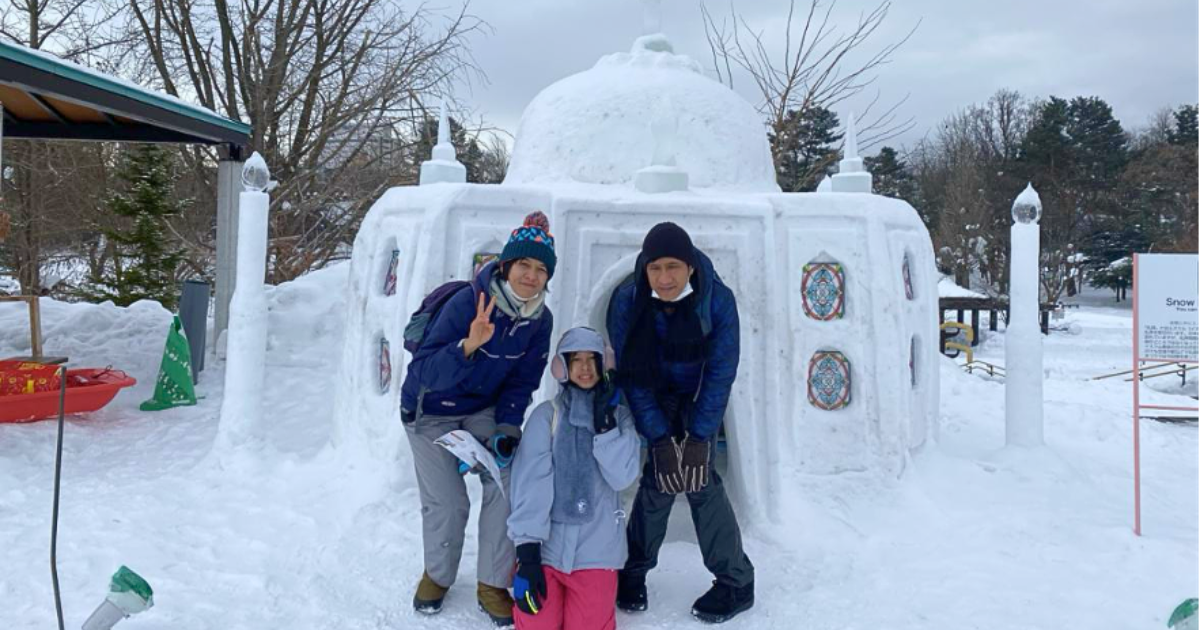
Family photo in front of snow mosque
I believe that hope becomes stronger when we tell our stories. Not to confront, but to connect.
Hope looks like:
- A steaming bowl of Muslim-friendly ramen in a small restaurant
- A Snow Mosque glowing under winter lights
- A community learning to embrace food diversity and diverse culture
- A friendship born from a simple invitation
Looking back, I never imagined that accepting an invitation to taste a bowl of ramen would lead me to meet community where Japanese and foreign residents can be in one circle and experience carving a mosque out of snow alongside people from different backgrounds.
But perhaps that is how meaningful connections begin.
Not with something extraordinary, but with a simple invitation, a shared experience, and a willingness to understand one another.
I hope that by sharing this story, more people, regardless culture, will feel encouraged to build their own bridges, one meal, one conversation, one shared project at a time.
More About Nareswari (Instagram)
Other Nareswari’s writing
Halal Ramen in Sapporo: Fukunoki’s Unique Tomato-Based Ramen